

Casa intera
Una “tiny house” tra i ciliegi nella regione dei laghi
Scegli le date per vedere i prezzi
Galleria fotografica per Una “tiny house” tra i ciliegi nella regione dei laghi
Servizi più richiesti
- Cucina
- Lavatrice
- Wi-Fi gratuito
- Aria condizionata
- Spazio all’aperto
- Parcheggio disponibile
Il prezzo attuale è 182 €
182 €
tasse e oneri inclusi
26 ott - 27 ott
Opzioni della camera
Verifica la disponibilità per queste date

Accedi per visualizzare gli extra e gli sconti idonei. Prenotare conviene!
Informazioni sulla zona

Elsterheide
Ristoranti
- Restaurant Seestern9 min in auto
- DerLeuchtTurm14 min a piedi
- Dorfkrug Großkoschen4 min in auto
- Lutki-Hütte8 min in auto
- McDonald's10 min in auto
Informazioni su questa struttura
Una “tiny house” tra i ciliegi nella regione dei laghi
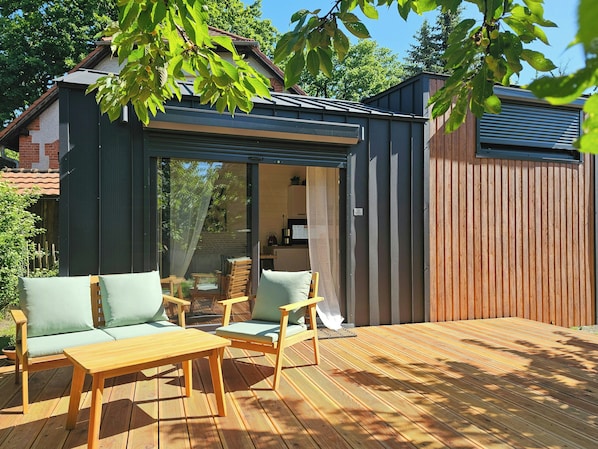
- This tiny house sits in the heart of the Lusatian Lake District, nestled beneath two old cherry trees in the front yard of a farmhouse dating back to 1790. In summer, you can help yourselves to the cherries right off the tree. Next door is the village’s old heritage museum.
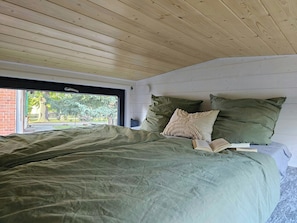
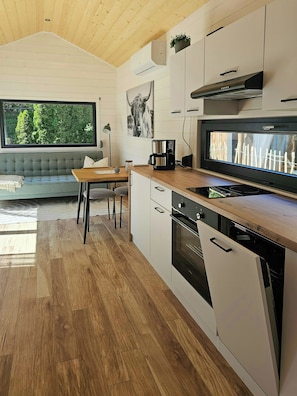
We've carefully planned every centimetre of the tiny house: cookware, a fridge with a freezer compartment, a small washing machine with a drying rack and storage space under the stairs for your luggage. We provide small coffee packets free of charge, and you can also buy eggs and honey on-site.
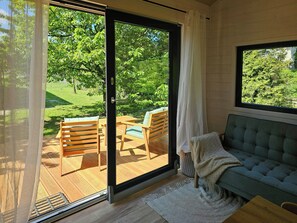
The entire front garden's at your disposal and leads to a field where you can watch chickens and two Highland cattle. There's a lockable garage for bicycles as well as a private parking space. The patio under the cherry trees invites you to linger.
Geierswalder See, with its striking lighthouse, is about 1 km away on foot. By bike, you can explore the extensive network of bike paths around the five large lakes. The Lusatian Lake District combines nature and water with the region’s industrial history. Discover observation towers, former open-pit mining areas, and special places that tell the story of lignite mining.
The European Union and the Free State of Saxony supported the construction of the tiny house as part of the EU “Regional Growth” funding programme.