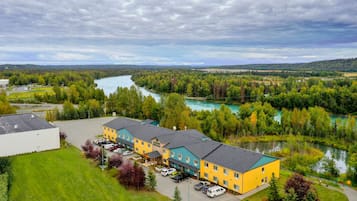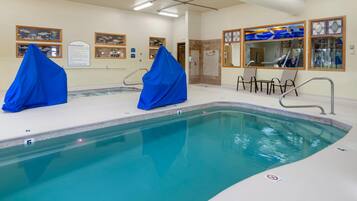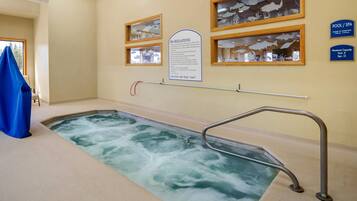
Foto di Sharrie Shaw
Hotel con piscina a Nikiski
- Non preoccuparti se cambi ideaScegli un hotel con cancellazione gratuita.
- Concediti un viaggio specialeAccedi al tuo account e risparmia il 10% o più su migliaia di hotel.
- Trova l’alloggio che fa per teCerca fra un milione di strutture in tutto il mondo.
Hotel con piscina in zona Nikiski: controlla la disponibilità
Questa sera
Domani
Questo fine settimana
Il prossimo fine settimana
I nostri consigli sugli hotel con con piscina nei pressi di questa destinazione: Nikiski

Il prezzo attuale è 102 €
tasse e oneri inclusi
1 feb - 2 feb

8.6 su 10, Eccellente, (800 recensioni)

Alaska Fishing Lodge Casetta in legno di abete rosso sul fiume Kenai, matrimoni e altro!
Alaska Fishing Lodge Casetta in legno di abete rosso sul fiume Kenai, matrimoni e altro!Soldotna
10.0 su 10, Eccezionale, (20 recensioni)
Il prezzo attuale è 1216 €
tasse e oneri inclusi
10 gen - 11 gen
Prezzo a notte più basso trovato nelle ultime 24 ore, per un soggiorno di 1 notte per 2 adulti. Prezzi e disponibilità possono cambiare. Potrebbero essere previste condizioni aggiuntive.
![The Arctic Circle is one of the five major circles of latitude that mark maps of the Earth. As of 16 February 2015, it runs 66°33′45.6″ north of the Equator.
The region north of this circle is known as the Arctic, and the zone just to the south is called the Northern Temperate Zone. The equivalent polar circle in the Southern Hemisphere is called the Antarctic Circle.
The Arctic Circle is the southernmost latitude in the Northern Hemisphere at which the sun can remain continuously above or below the horizon for 24 hours (at the June solstice and December solstice respectively). North of the Arctic Circle, the sun is above the horizon for 24 continuous hours at least once per year (and therefore visible at midnight) and below the horizon for 24 continuous hours at least once per year (and therefore not visible at noon). On the Arctic Circle those events occur, in principle, exactly once per year, at the June and December solstices, respectively. However, in practice, because of atmospheric refraction and mirages, and because the sun appears as a disk and not a point, part of the midnight sun may be seen on the night of the northern summer solstice up to about 50′ (90 km (56 mi)) south of the Arctic Circle; similarly, on the day of the northern winter solstice, part of the sun may be seen up to about 50′ north of the Arctic Circle. That is true at sea level; those limits increase with elevation above sea level, although in mountainous regions there is often no direct view of the true horizon.
The position of the Arctic Circle is not fixed. It directly depends on the Earth's axial tilt, which fluctuates within a margin of 2° over a 40,000-year period,[2] notably due to tidal forces resulting from the orbit of the Moon. The Arctic Circle is currently drifting northwards at a speed of about 15 m (49 ft) per year; see Circle of latitude for more information.
#snow](https://images.trvl-media.com/place/6140564/a9f9449e-bab4-40a6-a9a1-5356b0cc2aa8.jpg?impolicy=fcrop&w=1200&h=500&q=medium)